Mobile Commerce Platform
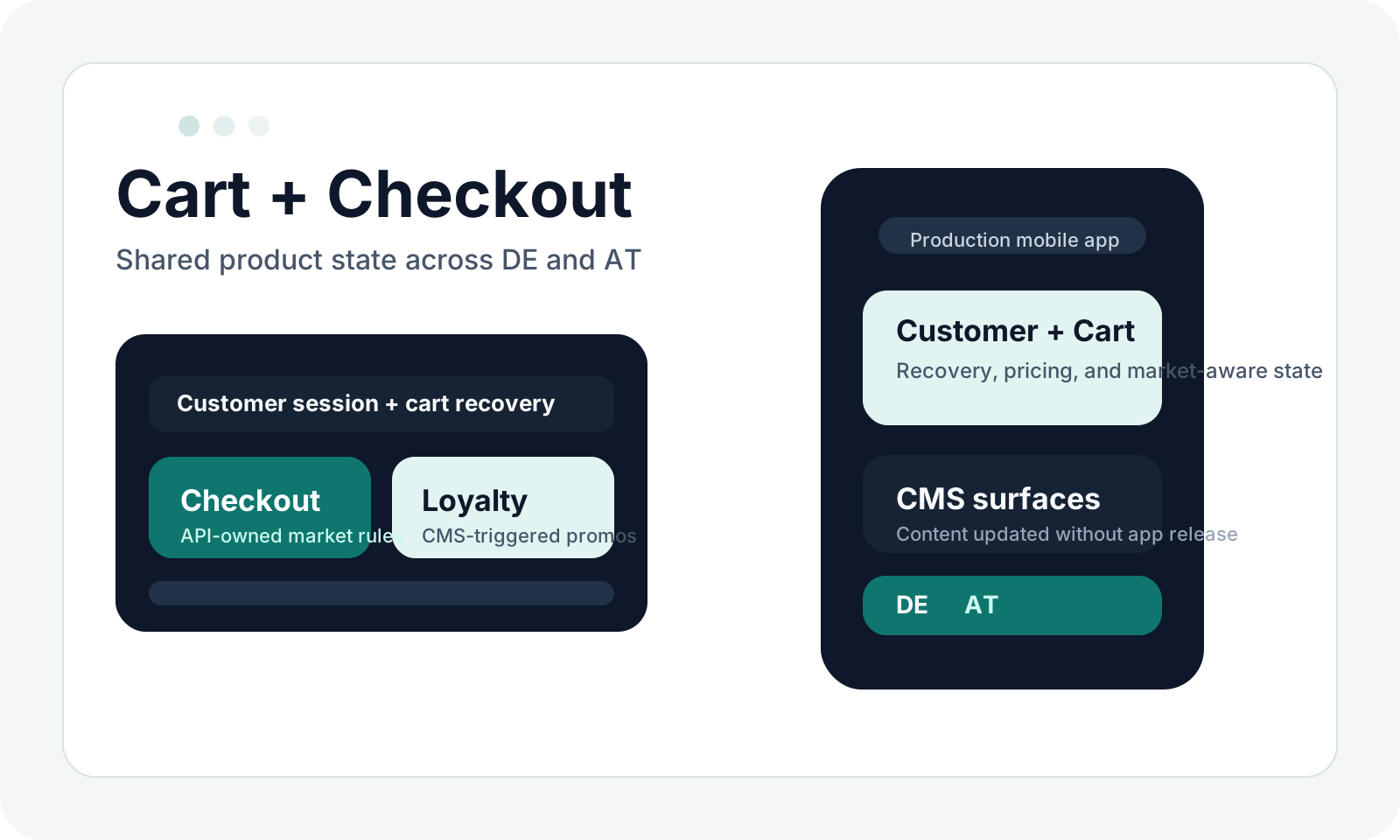
Shipped cart, checkout, CMS, and loyalty flows for a production retail app serving Germany and Austria across mobile and API layers.
- Markets shipped
- DE + AT
- Core journeys built
- 5
- Retail application
- Production
One mobile product supported releases across Germany and Austria.
Customer, cart, checkout, CMS, and loyalty flows were implemented in the app end to end.
The work shipped in a live environment rather than a demo path.
Outcome
Delivered core mobile-commerce journeys end to end across German and Austrian markets, from customer state and cart logic to checkout, CMS, and loyalty flows.
Key decision
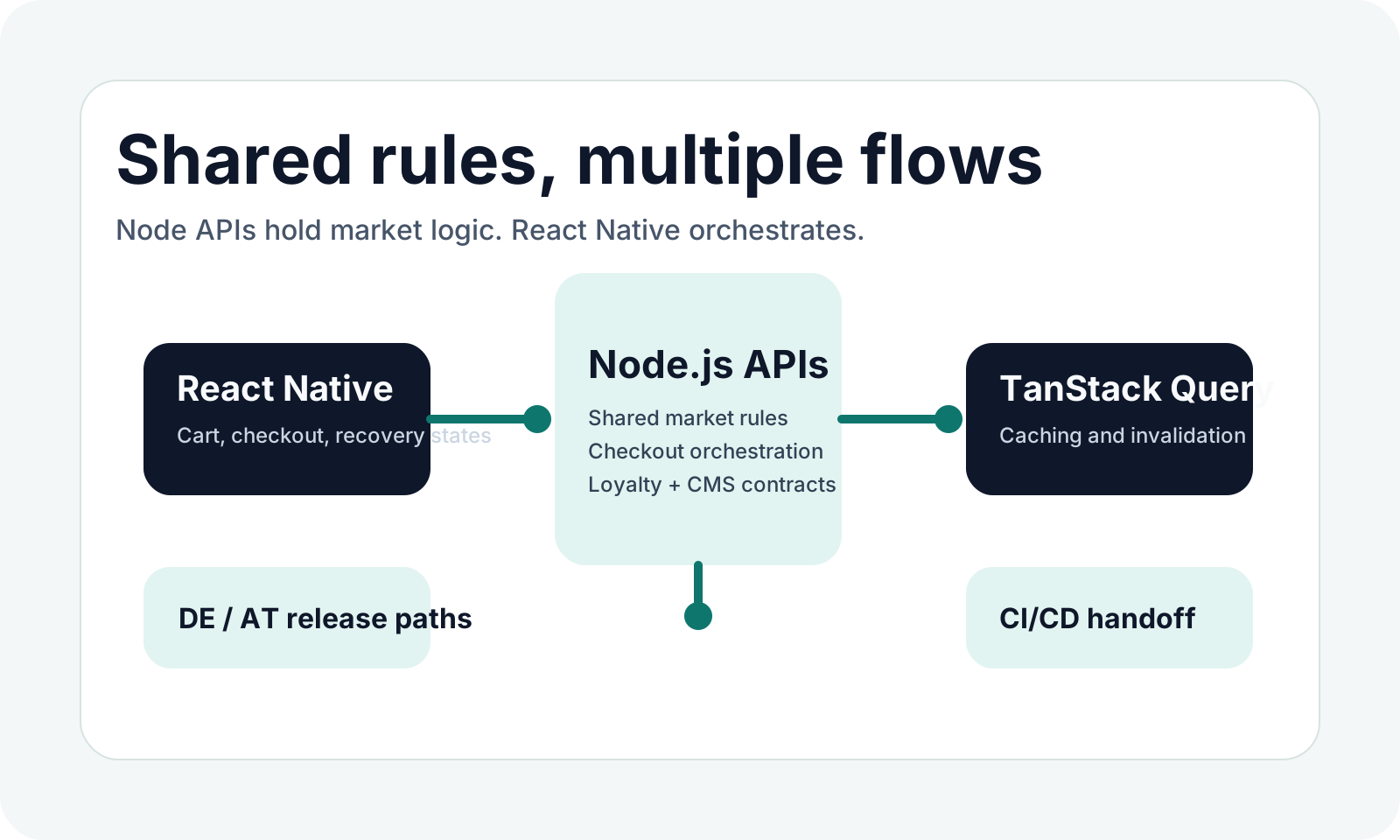
The platform kept business rules in shared APIs and query orchestration rather than duplicating market logic in the app, which made releases safer and behavior easier to trace.
Screens
The problem
The product already had real customers, multiple markets, and the usual retail pressure points: carts that had to survive app restarts, checkout that had to behave consistently, CMS-driven content that changed without a client release, and loyalty rules that could not drift between screens.
The hard part was not building one happy-path flow. It was making several business-critical flows behave consistently as the product kept shipping.
Constraints that shaped the design
- Two active markets. Germany and Austria shared most behaviour, but not all of it. Market-specific logic had to stay visible and testable.
- Mobile state can go stale quickly. A cart touched by pricing, stock, CMS, and loyalty data cannot assume the device has the latest truth.
- Checkout failures are trust failures. Recovery paths matter as much as the nominal path when money is involved.
- Retail teams ship continuously. Content, campaigns, and loyalty mechanics change faster than app releases do.
What I built
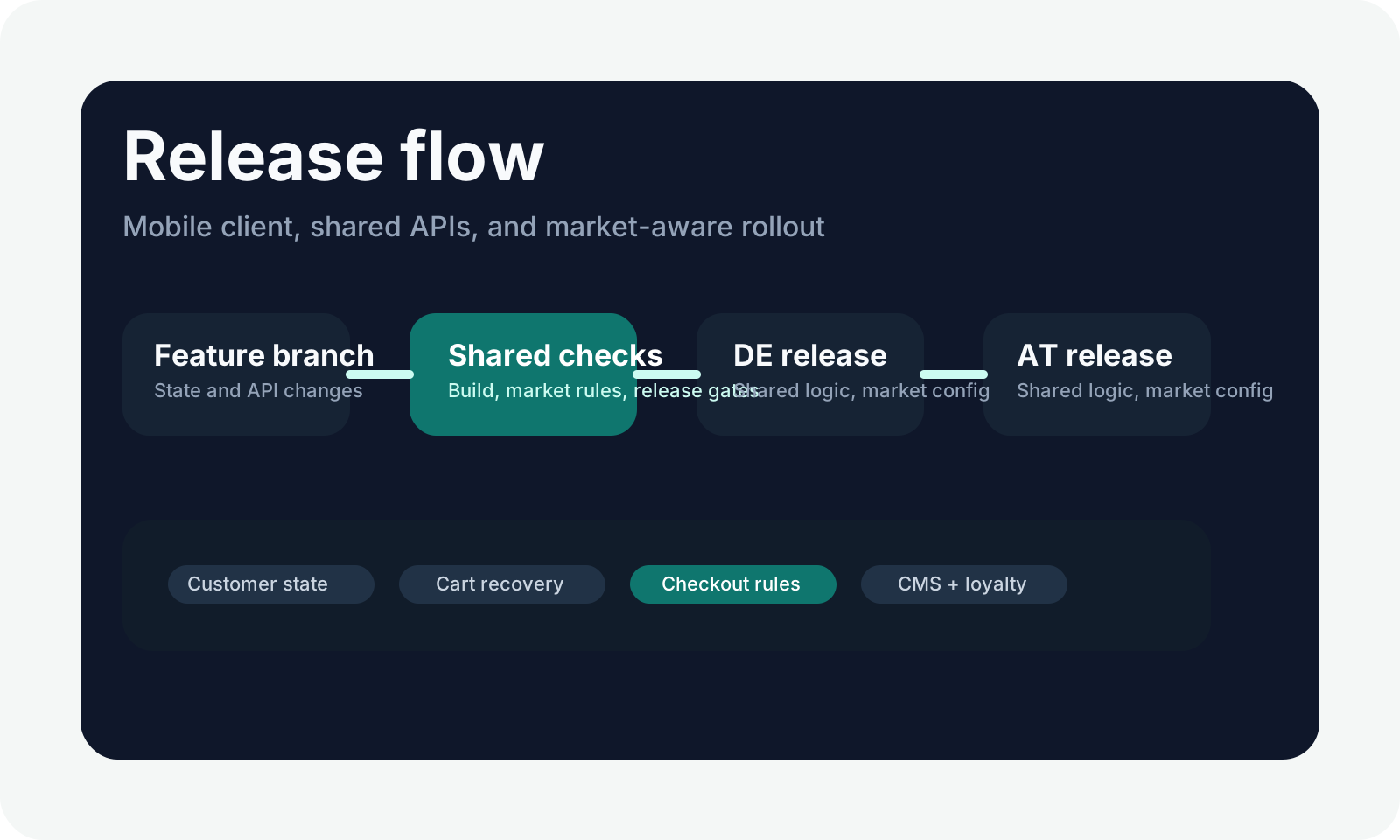
I implemented customer, cart, checkout, CMS, and loyalty flows in the React Native app, integrating with the shared Node.js backend-for-frontend (BFF) that held market-specific rules and the API contracts those flows depended on. On the app side, that included the state architecture in the client and the delivery path that moved changes from branch to release.
Keeping market rules out of the client
The architectural principle behind the platform was to keep market-specific rules in the shared API layer instead of letting them spread into whichever screen needed a quick conditional first.
When a cart behaves differently by market, the rule belongs in the API, not in whichever screen happens to need it first.
Building the app around that principle kept the React Native code focused on orchestration, caching, and recovery states, while TanStack Query handled fetch lifecycles and invalidation. It also meant checkout behaviour could be changed once, upstream, and observed in one place, instead of being reimplemented across multiple mobile paths.
What shipped
The delivered scope covered customer state, cart behaviour, checkout, CMS-driven surfaces, and loyalty journeys in a production retail app used across German and Austrian markets. The result was a cleaner split between app and backend responsibilities, more predictable releases, and a mobile codebase that stayed easier to reason about as business rules changed.
What I would do differently
I would document the market-variation model even earlier in the project. The code-level separation was there, but giving product and QA the same vocabulary for “shared rule” versus “market rule” sooner would have made edge-case review faster.